Understanding Aerator Depth & Working Width: Tine Length vs. Real Soil Plugs
Advertised tine length measures the metal part on the shelf; actual soil penetration depth depends on moisture, soil density, and downward force.
1. Why 3.5"–4" Tines Pull 1.75"–2.75" Soil Cores
On both manual hollow-tine forks and tow-behind coring spoons, the upper 0.75" to 1.25" of the tine is the mounting collar, weld throat, or ejection port. Furthermore, thatch compression and soil resistance mean a 3.5-inch tine typically extracts a 1.75-to-2.75-inch soil core—right where turfgrass root crowns need oxygen and water.
Rule of thumb: Never judge an aerator by advertised tine length alone; check weight tray capacity (140–150 lbs) and tine wall bevel.
2. Working Width: 9" Manual vs. 40" & 48" Tow-Behind
A 48-inch tow-behind aerator covers 20% more turf per pass than a 40-inch model, cutting pass counts on a 1/2-acre lawn by roughly 15–20 minutes—provided it fits through your yard gates.
Rule of thumb: Run two criss-cross passes (north-south, then east-west) with a tow-behind aerator to achieve ideal plug density.
3 benchmark picks
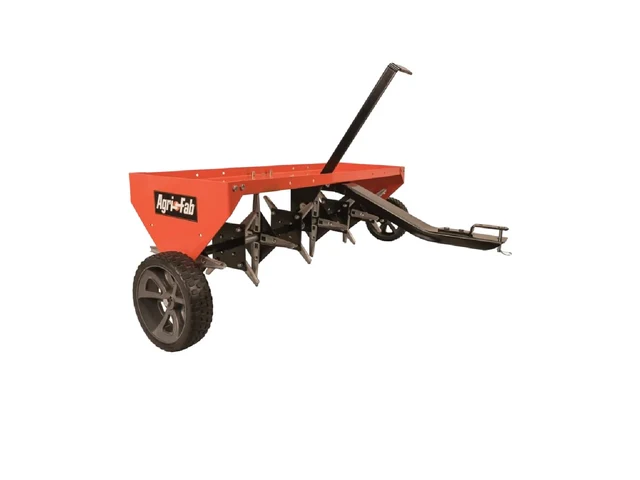
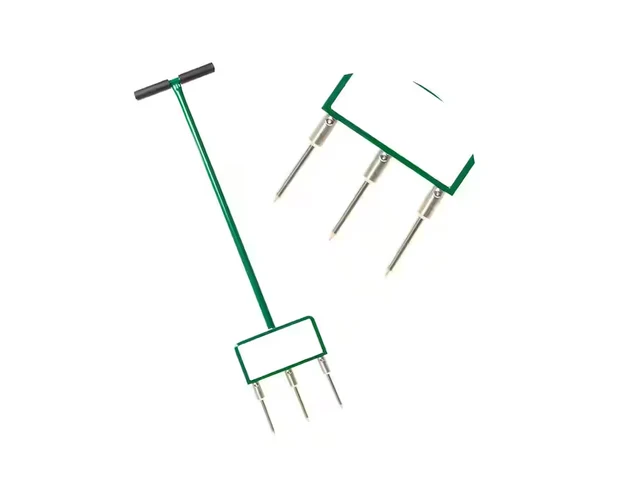
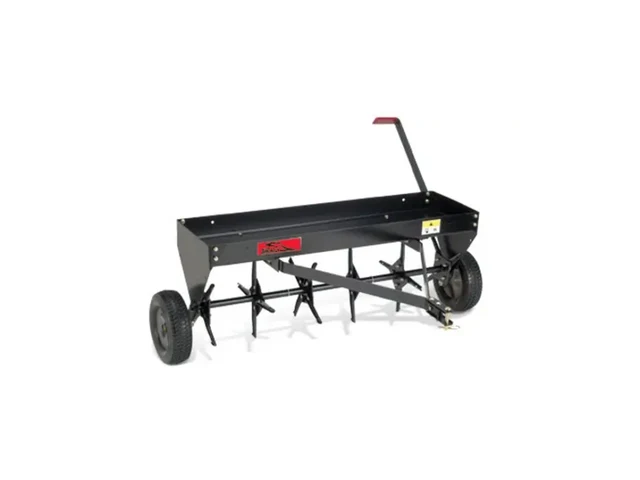
Ready to pick?
Questions
What is the difference between a core aerator and a spike aerator?
A hollow-tine core aerator (also called a plug aerator) extracts finger-sized cylinders of soil and deposits them on top of the lawn, creating open channels that let compacted soil expand, breathe, and absorb water. A solid-spike aerator (or aerator shoes) merely pokes holes by pushing soil sideways and downward, which can actually tighten compacted clay around each hole.
Does a 3.5-inch or 4-inch tine length guarantee a 4-inch deep soil plug?
No. Published tine length measures the entire steel coring tube or spoon from tip to mounting collar. In real-world lawn conditions, actual soil core depth typically ranges from 1.5 to 2.75 inches depending on soil moisture, clay compaction, operator foot force (on manual tools), or the amount of concrete-block ballast strapped to a tow-behind tray.
Why does my manual core aerator keep clogging with dirt?
Clogging almost always happens for one of two reasons: aerating when the soil is bone-dry and powdery, or aerating when it is saturated mud. Water your lawn thoroughly for 20–30 minutes the day before aerating—then wait 12 to 24 hours so the soil is moist like a wrung-out sponge. Moist soil slides smoothly up tapered hollow tines so each new step pushes the previous plug out the top.
Can I pull a 40-inch or 48-inch tow-behind plug aerator with a zero-turn mower?
Only if your zero-turn mower has a factory-approved rear hitch plate and its operator's manual permits towing 150–200 lbs (the combined weight of the aerator frame plus 100–150 lbs of concrete blocks). Never drop the coring tines while backing up or making tight zero-radius spin turns, which will bend the coring spoons and tear the turf.