Cleaning and Storing Lawn Aeration Tools Between Seasons
Leaving wet dirt plugs inside hollow tines over the winter causes internal rust pitting—the #1 cause of spring clogging.
1. Always Knock Out the Final Plugs Before Putting the Tool Away
When you finish your last pass with a manual hollow-tine aerator, each tube still holds one soil plug. Push those final plugs out immediately with your cleaning rod while the soil is still soft—if left to dry over winter, clay hardens like kiln brick inside the tube.
Rule of thumb: Hose off all mud, let the steel dry in the sun, and spray the inside of hollow tines with Fluid Film, WD-40, or silicone.
2. Off-Season Care for Tow-Behind Plug Aerators
Unload concrete ballast blocks from the tray, wash dirt off the galvanized or painted coring spoons, grease wheel bearings if equipped, and oil the clevis hitch pin and transport lever pivot.
Rule of thumb: Store tow-behind aerators indoors or under a breathable tarp so rainwater doesn't pool in the weight tray.
3 benchmark picks
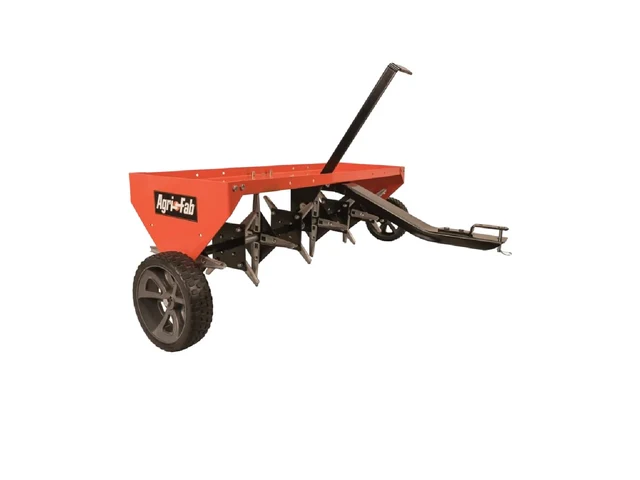
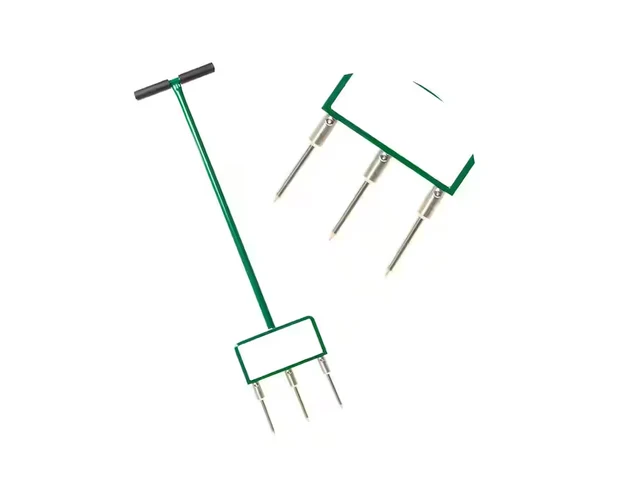
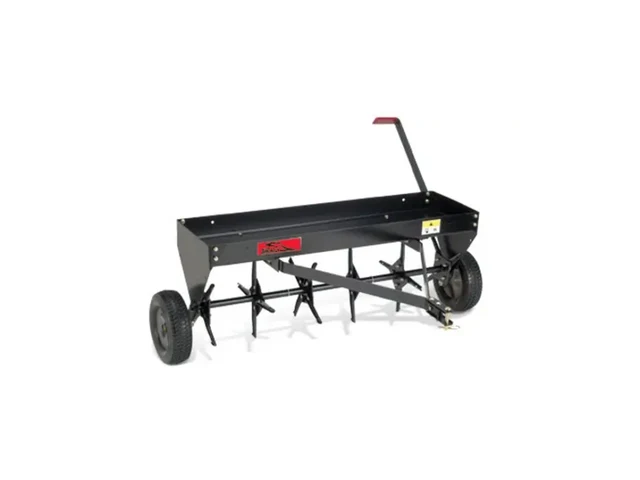
Ready to pick?
Questions
What is the difference between a core aerator and a spike aerator?
A hollow-tine core aerator (also called a plug aerator) extracts finger-sized cylinders of soil and deposits them on top of the lawn, creating open channels that let compacted soil expand, breathe, and absorb water. A solid-spike aerator (or aerator shoes) merely pokes holes by pushing soil sideways and downward, which can actually tighten compacted clay around each hole.
Does a 3.5-inch or 4-inch tine length guarantee a 4-inch deep soil plug?
No. Published tine length measures the entire steel coring tube or spoon from tip to mounting collar. In real-world lawn conditions, actual soil core depth typically ranges from 1.5 to 2.75 inches depending on soil moisture, clay compaction, operator foot force (on manual tools), or the amount of concrete-block ballast strapped to a tow-behind tray.
Why does my manual core aerator keep clogging with dirt?
Clogging almost always happens for one of two reasons: aerating when the soil is bone-dry and powdery, or aerating when it is saturated mud. Water your lawn thoroughly for 20–30 minutes the day before aerating—then wait 12 to 24 hours so the soil is moist like a wrung-out sponge. Moist soil slides smoothly up tapered hollow tines so each new step pushes the previous plug out the top.
Can I pull a 40-inch or 48-inch tow-behind plug aerator with a zero-turn mower?
Only if your zero-turn mower has a factory-approved rear hitch plate and its operator's manual permits towing 150–200 lbs (the combined weight of the aerator frame plus 100–150 lbs of concrete blocks). Never drop the coring tines while backing up or making tight zero-radius spin turns, which will bend the coring spoons and tear the turf.